


Monday, November 2, 2026
Back to articles
From us to you
The recycling of lithium-ion batteries does not begin with metal extraction. Upstream, several steps are necessary to secure battery waste, identify its potential for reuse, and prepare the materials for recycling. With the expansion of its dismantling and disassembly (D&D) operations at its Béthune facility, Mecaware has chosen to take control of a strategic stage in the recycling value chain. Already up and running, this operation also serves as a primary source of revenue for the company.

The hydrometallurgical process developed by Mecaware makes it possible to extract and recover the strategic metals contained in black mass, a black powder produced by grinding and separating the components of lithium-ion batteries.
This material serves as the starting point for Mecaware’s recycling process. Its availability, composition, and quality are therefore critical to ensuring the operation of its industrial demonstrator and, ultimately, supporting the deployment of its technology on a larger scale.
However, access to black mass is now a major challenge for the European battery recycling industry. Some of this material is exported to Asia, where processing and refining capacities have historically been more developed. This situation raises a strategic question: How can we ensure a sufficient supply of secondary raw materials to produce recycled metals in Europe?
For Mecaware, the solution lies in particular in better control of the stages upstream of the hydrometallurgical process.
By developing a battery dismantling and disposal operation, the company aims to secure its access to materials for recycling, while improving traceability and quality control.
The quality of battery pretreatment plays a key role in the performance of recycling processes.
In fact, effective separation of the various components helps limit the presence of undesirable elements in the black mass and facilitates subsequent metal extraction and purification processes. Conversely, inadequately prepared material can complicate the hydrometallurgical process, result in additional costs, and affect recovery rates.
It is with this in mind that Mecaware is expanding its D&D operations at its Béthune facility, in partnership with organizations involved in the collection of end-of-life batteries, notably Batribox and Recycler mon véhicule.
This initiative represents a first step toward establishing an integrated value chain, from battery collection to the production of recycled metals.
Before they can be converted into secondary raw materials, end-of-life lithium-ion batteries undergo several processing steps.

1. Battery Diagnosis and Sorting
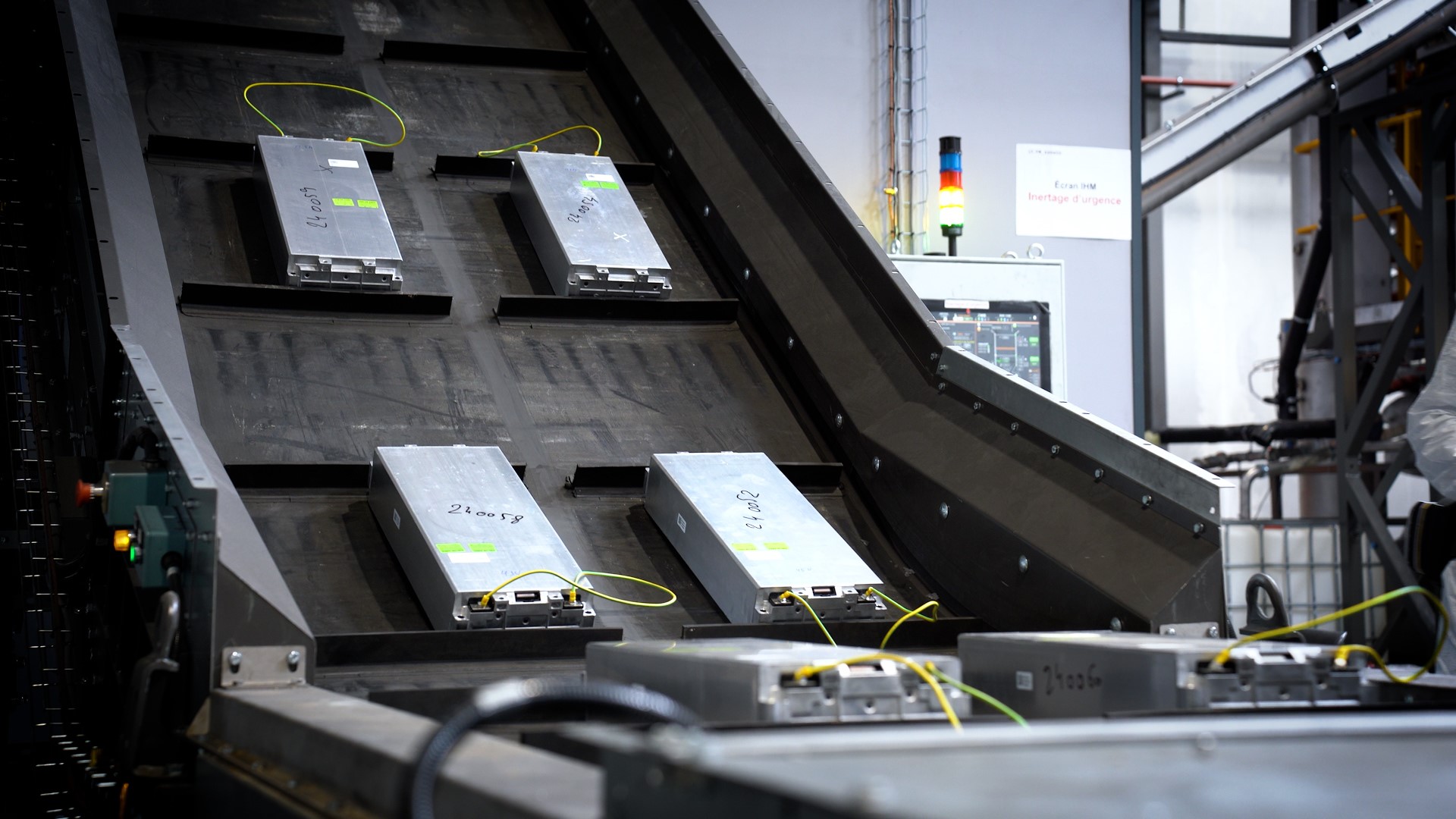
Upon arrival at the facility, the batteries are identified, inspected, and sorted to assess their condition and recycling potential.
Not all batteries are necessarily intended for immediate recycling. Some may still have sufficient capacity to be considered for a second life, particularly in stationary energy storage or small-scale mobility applications, provided they meet the technical and safety requirements.
Mecaware is working with Terapolis, among others, on opportunities to reuse batteries in energy storage systems associated with agrivoltaic projects.
This approach makes it possible to direct batteries to the recycling stream best suited to their condition.
2. Discharge and Securing
Batteries that cannot be reused are sent for recycling.
First, they undergo discharge and safety measures appropriate to their condition and characteristics. This step is intended to reduce the electrical and thermal risks associated with handling them and to prepare for their dismantling under controlled conditions.
3. Dismantling and Sorting of Components
Once secured, the batteries are dismantled to separate their various components.
Recovered materials are sorted by type and, whenever possible, directed to appropriate recycling streams.
This preliminary sorting allows certain materials to be recovered directly, while preparing the fractions that require further processing.
4. Grinding and the production of black mass

The fractions intended for recycling of active materials are then sent to specialized partners for mechanical grinding.
Various separation processes are used to isolate the materials—including the metal fractions—until black mass is obtained.
This powder, which primarily consists of compounds containing lithium, nickel, cobalt, or manganese —depending on the chemistry of the processed batteries—serves as the raw material for Mecaware’s hydrometallurgical process.
It can then be transported to the industrial demonstration facility in Béthune to undergo the various stages of extraction and refining of strategic metals.
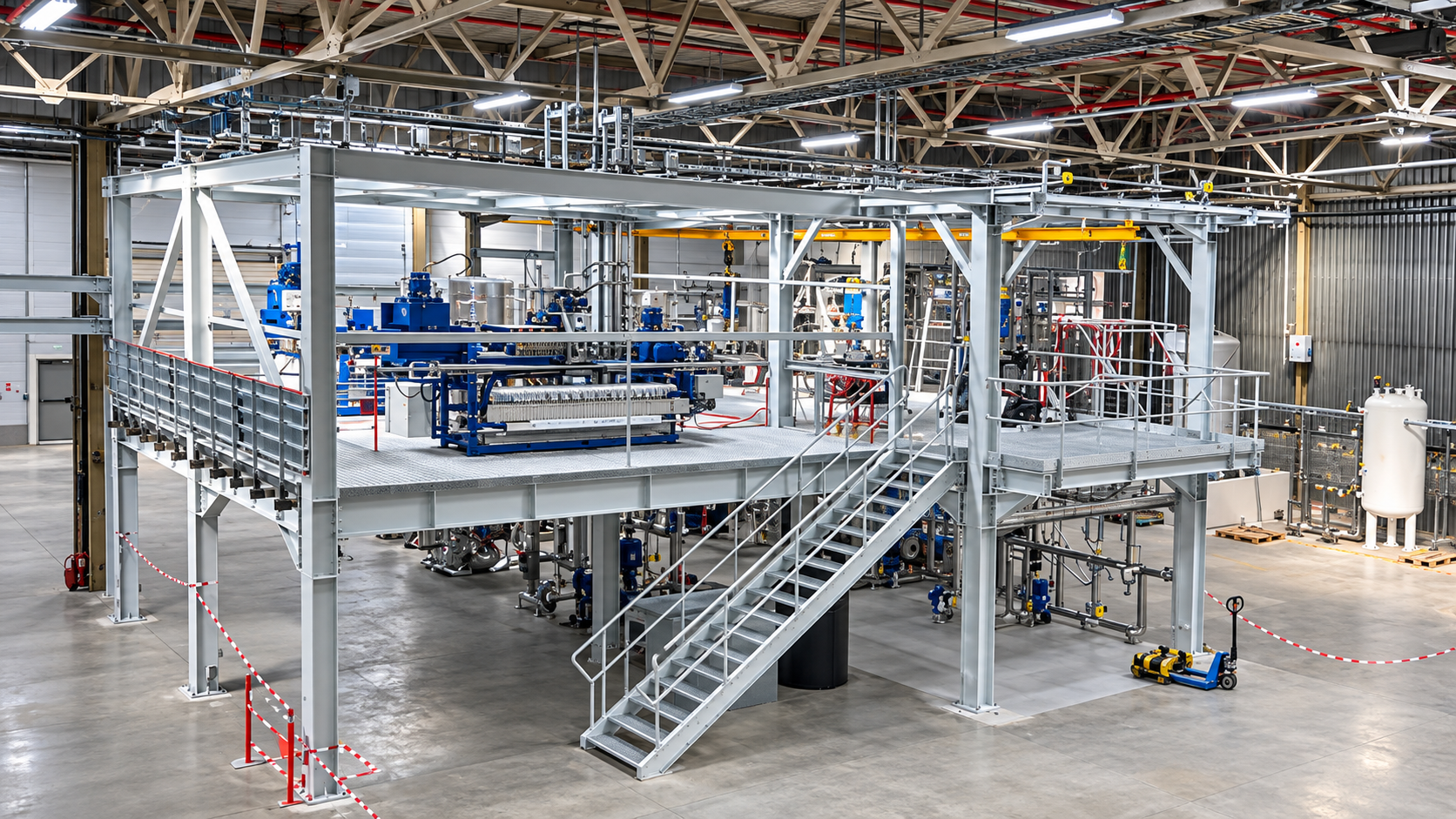
With its unloading and dismantling operations at the Béthune site, Mecaware is now involved from the very beginning of the lithium-ion battery recycling value chain .
Already operational and generating the company’s first revenue, this business represents a major milestone in Mecaware’s industrial and commercial development. It addresses the practical needs of stakeholders involved in the collection and management of end-of-life batteries, while helping to secure the supply of raw materials for its hydrometallurgical demonstration plant.
By strengthening synergies with stakeholders involved in the collection, reuse, and recycling of materials, Mecaware is developing a complementary approach that combines battery pretreatment with the recovery of strategic metals.
This initiative is part of a two-pronged strategy: to offer industrial solutions for the processing of end-of-life batteries today and to prepare for the ramp-up of its recycling technology.
From battery collection to the production of recycled metals, Mecaware is helping to build a European supply chain capable of conserving and making the most of its strategic resources.
Read the next article


